Our chefs present Ottawa cuisine — in Niagara
Originally filed at roneade.com
Part one of two. Food and wine enthusiasts celebrate an Ottawa Valley theme dinner at a college teaching restaurant in Niagara-on-the-Lake.
Publication note. The reporting dates from 2014 to 2016. Ron Eade died in August 2015; nothing on this site is new writing in his voice. Restaurants, prices and staffing reflect the date shown above.
The question behind the piece
Eade opened with something he had been turning over for fifteen years as a food journalist: what, exactly, distinguishes cuisine across a country as large and varied as Canada? Broad strokes were easy — the Maritimes against the Saskatchewan plains, Indigenous food cultures against more recent arrivals from Europe and Asia — but he confessed he was usually stumped when asked what identifies the cooking of the nation's capital in particular.
He offered his own partial answers before going looking for a better one. The Ottawa Valley supports award-winning cheese makers, bakers and craft brewers. Heritage breeds of livestock get top billing at the region's better tables. Owner-operated restaurants run by thoughtful chefs were, he wrote, reforging links from farm to fork of a kind not seen since the world wars. And there was a growing respect for ingredients, with cooks keen to use every edible part of beast and fowl — a return to older values and frugality that eschews waste while celebrating simple, honest preparation.
The dinner
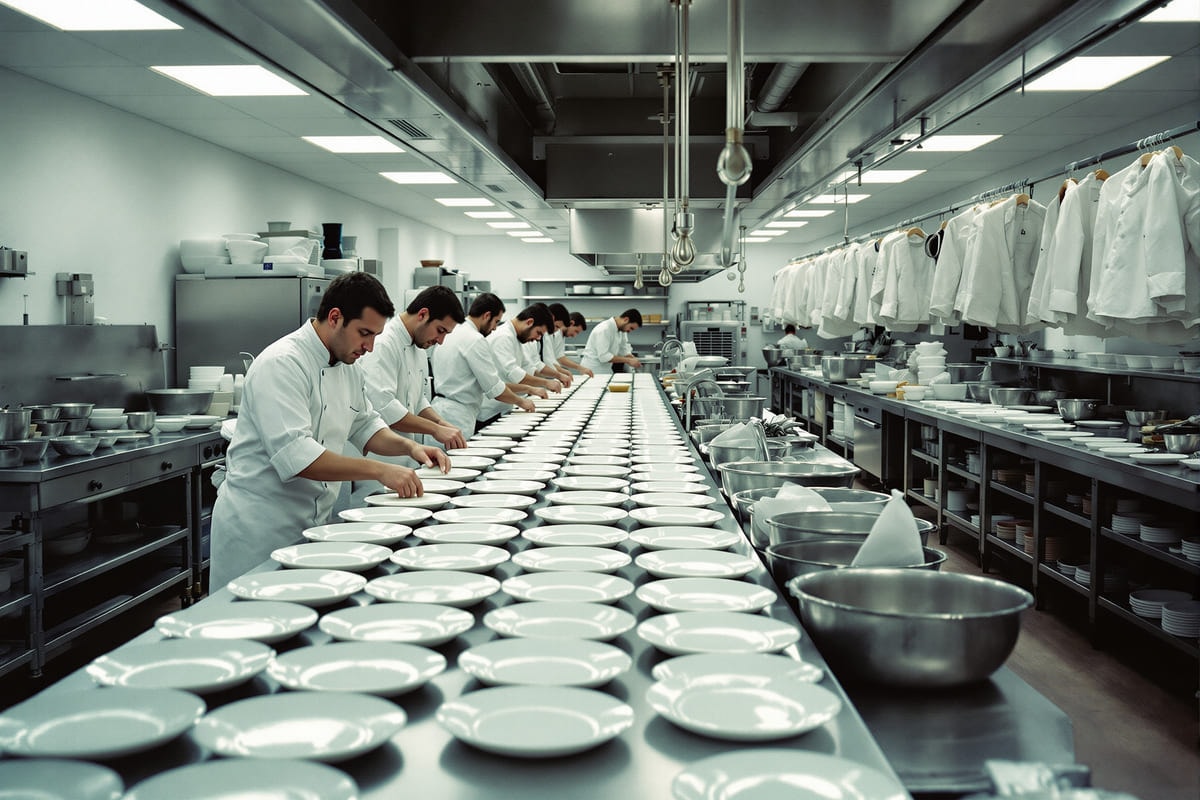
The occasion was the fourth of five Chef Signature Series dinners at Benchmark, the restaurant lab operated by the Canadian Food & Wine Institute at Niagara College in Niagara-on-the-Lake, cooked for about ninety paying guests.
The Ottawa cast was Patrick Garland, chef-owner of Absinthe Café; Norm Aitken, chef-owner of Juniper Kitchen & Wine Bar; Steve Mitton, chef-owner of Murray Street Kitchen.Wine.Charcuterie; and John Taylor, chef-owner of Domus Café and Taylor's Genuine Food & Wine Bar. Within two months Taylor would close Domus after eighteen years, and this dinner is where he first mentioned the expansion plan he later abandoned.
The menu
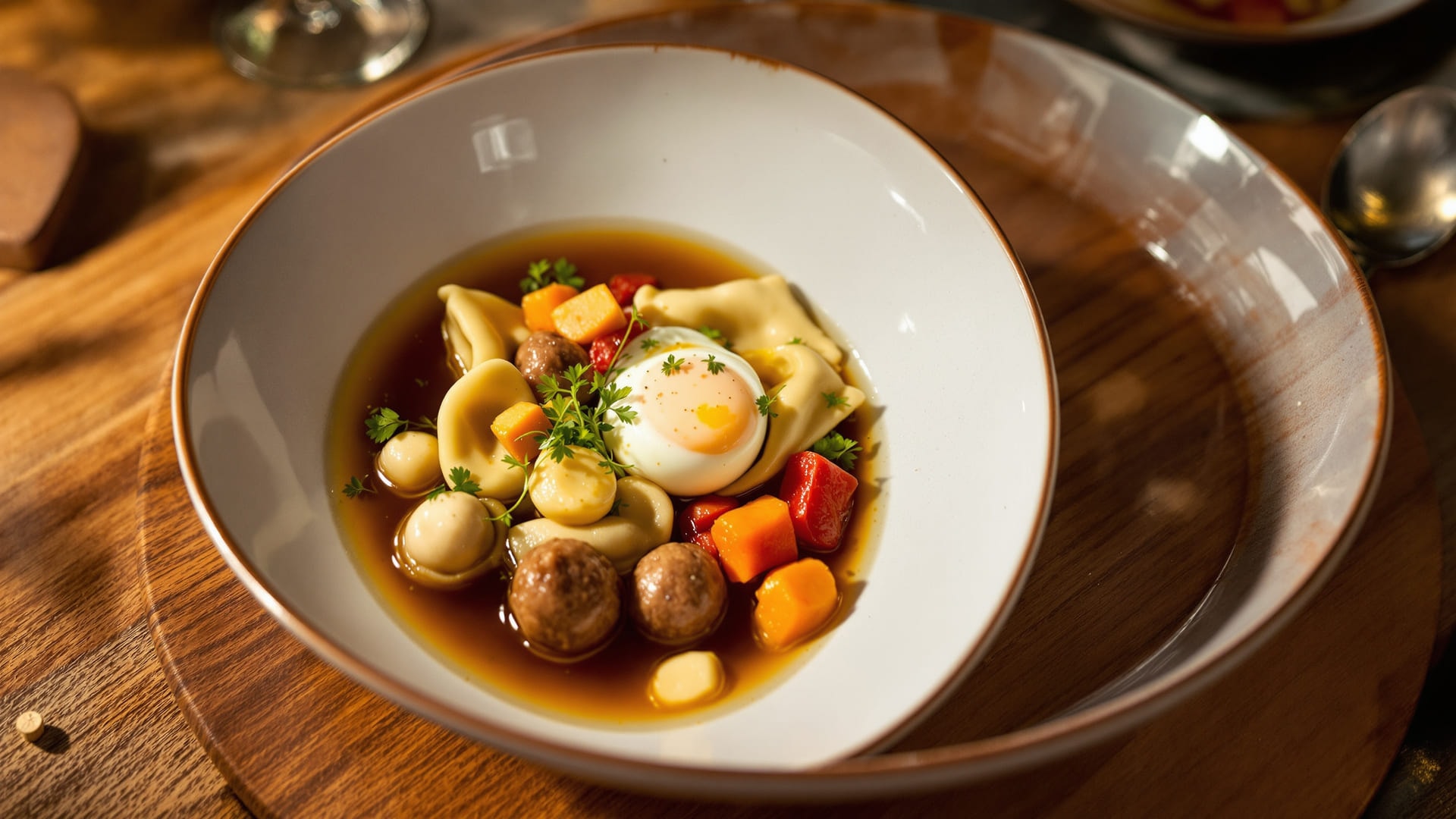
Garland opened with an Italian wedding soup built on duck consommé, with wild boar meatballs, goat ricotta, raviolini, a poached quail egg and a brunoise of root vegetables, tomato and courgette.
Taylor followed with warm Ontario smoked rainbow trout, celeriac remoulade, sheep's milk ricotta, apple butter, fried pavé, naked oats and tender shoots.
Mitton's third course was titled "The Whole Hog," and earned it: confit shoulder in crépinette, a trotter croquette with toasted oat sauce, cured loin, tongue, an apple and parsnip salad with maple-cider and soy vinaigrette, smoked bratwurst, and ham hock with caraway cabbage and mustard.
Aitken closed with a dessert he said reminded him of the Rideau Canal skateway: maple toffee presented in a tower of ice, Ottawa Valley cider brûlée, and a fried cinnamon pastry he calls a Beaver Bite. The recipe for that pastry appears in part two.
The college
Niagara College, founded in 1967 in Welland, had by 2014 grown to more than 9,000 full-time students and over 15,000 continuing education registrations a year, with a culinary arts programme of some 500 full-time and apprentice students — close in size, its dean said, to the programme at Algonquin College in Ottawa. Students there could also learn to brew at a teaching brewery or make wine at the campus winery, with the college's own beer and wine served in the restaurant.
The dean, Craig Youdale, had Ottawa roots himself: an Ottawa native, he apprenticed at a landmark capital hotel in 1989-90, worked as garde manger and pastry chef at a ByWard Market restaurant in 1991-92, and was chef at a Westboro restaurant from 1991 to 1993 before moving to Calgary. Two of the visiting Ottawa chefs, Aitken and Mitton, had been his students at the Culinary Institute of Canada in Charlottetown in the late 1990s.
Youdale explained why the series exists. "The day-to-day work of students involves curriculum and lab work, which is important," he said. "But what they don't otherwise get is exposure to what is happening in the food scene today — not just with local chefs, but visiting chefs from elsewhere to get a peek at what the world is doing." Each guest chef was assigned twelve students and four faculty chefs.
A student, and a customer
Eade found second-year student Benjamin Lillco, 19, sculpting an enormous quantity of vegetable balls for Garland's soup. "It's great to see the diversity of what various regions have to offer," Lillco said. He was, at the time, a junior team member representing the college at international culinary competition, bound for Scotland in 2015, Germany in 2016 and a world cup in Luxembourg that autumn, and worked part-time in the campus restaurant.
Diners had driven in from Burlington. "We come because we appreciate the creativity of different chefs," one said. "You get some insight into the chefs and what they do," his companion added, valuing the series at $359, or $79 per dinner.
The answer, more or less
Youdale gave Eade the closest thing to a reply to his opening question. "Among your Ottawa chefs, you're seeing a real grass-roots desire to connect with farmers, to showcase ingredients. Chefs are trying not to over-complicate things, and to me that's a good thing about the Ottawa food scene right now. In Ottawa, I also notice chefs are getting together to talk about food, to share ideas, to exchange information, which I don't think you see as much in other cities. Ottawa is big enough to offer diversity, but it's not too big to prevent chefs from getting together and interacting."
Teaching restaurants of this kind are a standard feature of Canadian culinary education, and the same model runs at Algonquin College in Ottawa. Eade's own view, stated plainly, was that the signature series was brilliant and that Algonquin might consider something like it.