Of course, it's not really a party until the pig comes out …
Originally filed at roneade.com
The third annual Day of the Pig draws a record three thousand visitors, and a good deal of piggy goodness.
Archive note. This page presents work first published on roneade.com between 2014 and 2016. Ron Eade died in August 2015; nothing on this site is new writing in his voice, and the reporting below is presented as a dated record rather than as current coverage. Restaurants, prices and staffing described here reflect the moment the piece was filed.
The event
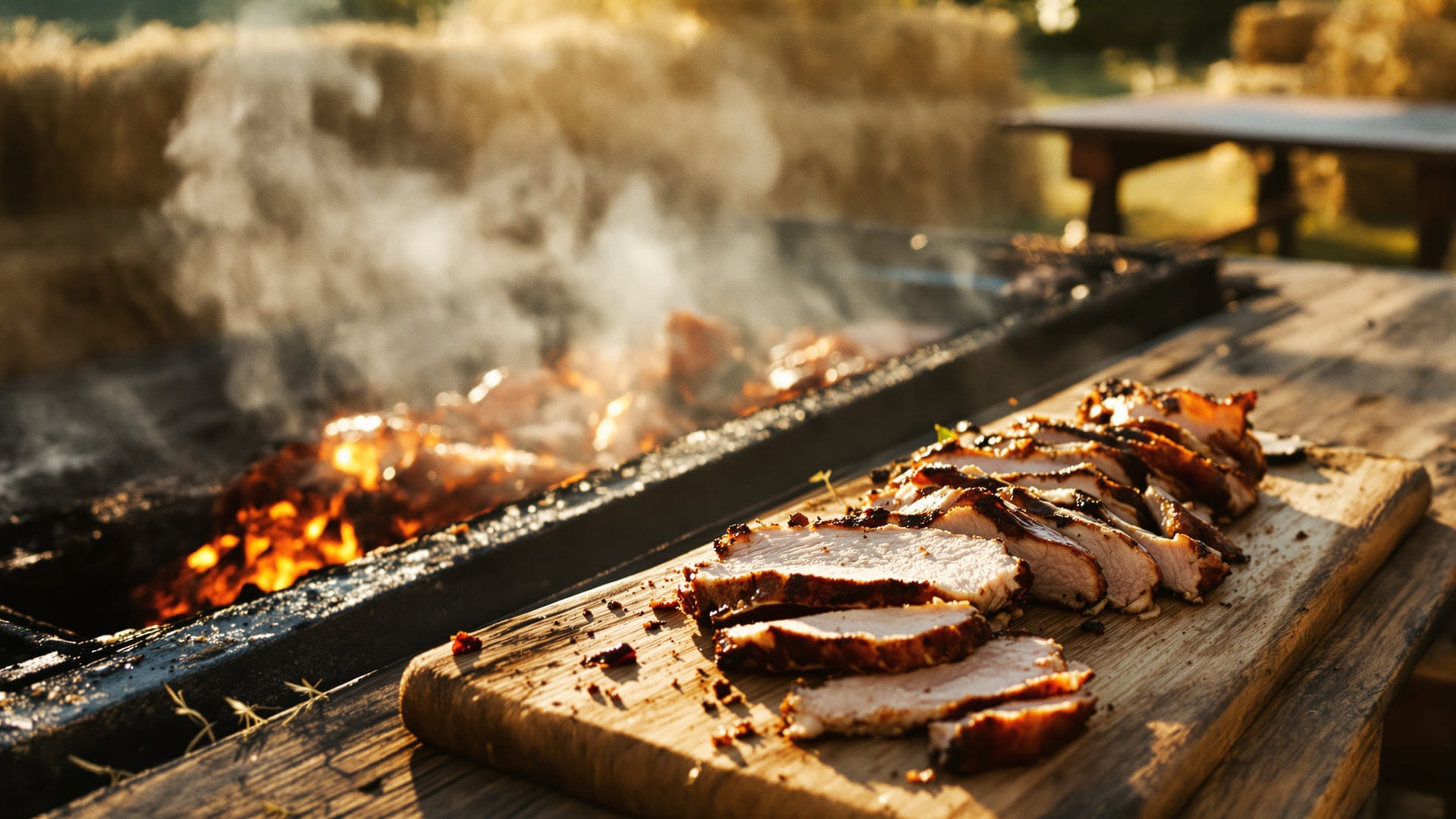
Barbecue enthusiasts, Eade wrote, are the first to concede that a summer party does not really begin until a large chunk of roasted hog comes out for carving — better still if it is a whole pig, around 170 pounds dressed, cured for three days and then slow-roasted overnight.
That is what was on offer at the third annual Day of the Pig at Seed to Sausage, the charcuterie business founded by Michael McKenzie in his garage and now operating from a plant in the countryside beyond Perth, not far from Sharbot Lake. Alongside the hog, a range of other artisan food producers showed everything from preserves to ravioli.
The growth of the event says something about how quickly small-producer food had caught on in the region. "It started as the grand opening for our store and we just kind of hoped somebody would actually come," said Ken McKenzie, Michael's father, who was deep in volunteer work when they spoke. "We originally hoped for maybe 100 people, but instead we got 1,200 folks in the first year, and 2,000 the year after that." Michael McKenzie put the 2014 attendance at about 3,000, helped by good weather. Figures were necessarily estimates, since no admission tickets were sold and all food and drink was cash.
The whole hog
The pig was sold, carved and consumed within two hours, with people queuing for perhaps thirty minutes for a share. More pork had been roasted overnight in the kitchen to follow. A pig sandwich platter with potato chips, cabbage slaw and two thick slices of pork roasted fourteen hours over an open pit sold for $10.
The sauce contest
Eade had driven out — ninety minutes westward in a small two-seat convertible — because he had agreed to judge the first Day of the Pig barbecue sauce competition. The prize was commercial rather than ceremonial: the winner received distribution options with two Kingston food wholesalers and an introduction to the buying team at a regional supermarket chain.
Nineteen sauces were entered. Judging was blind, by number, so entrants could not be identified. The panel included two chefs from a Stittsville restaurant, a brewer, a local township mayor and Eade himself.
Among the entrants was Shawna Harvey, a chef at a downtown Toronto grill who had made the three-and-a-half-hour trip after hearing about the competition on social media. "I've always had a thing for barbecue," she said, "and started making my own sauce three years ago. I find home-made sauce is best using local ingredients, no preservatives, no fillers. It's got to have big, bold flavours for me with lots of herbs, spice. I'm not a big fan of vinegar-based sauces." She was also enthusiastic about the value of the $10 pig platter.
Reading it now
Two things stand out a decade later. The first is scale: an artisan meat curer in a rural former abattoir pulling three thousand people to a field, without ticketing, on word of mouth. The second is the direction of travel — the same business opened its first Ottawa storefront less than a month after this event, and the piece about that opening explains the dry-ageing and curing programme in technical detail.
Whole-animal cookery of this kind sits at the intersection of craft and regulation, and the handling, curing and temperature control involved are governed by public health rules rather than tradition alone; Ottawa Public Health publishes the local guidance for special events serving food to the public.
Elsewhere in the archive, the same appetite for the whole animal surfaces in a pork belly recipe from a college teaching kitchen.