Artisan Seed to Sausage shop opens Tuesday in Ottawa
Originally filed at roneade.com
Among gourmet meats and cheeses, a steak dry-aged eighty days that will make a carnivore cry. Really.
Publication note. The reporting dates from 2014 to 2016. Ron Eade died in August 2015; nothing on this site is new writing in his voice. Restaurants, prices and staffing reflect the date shown above.
The shop
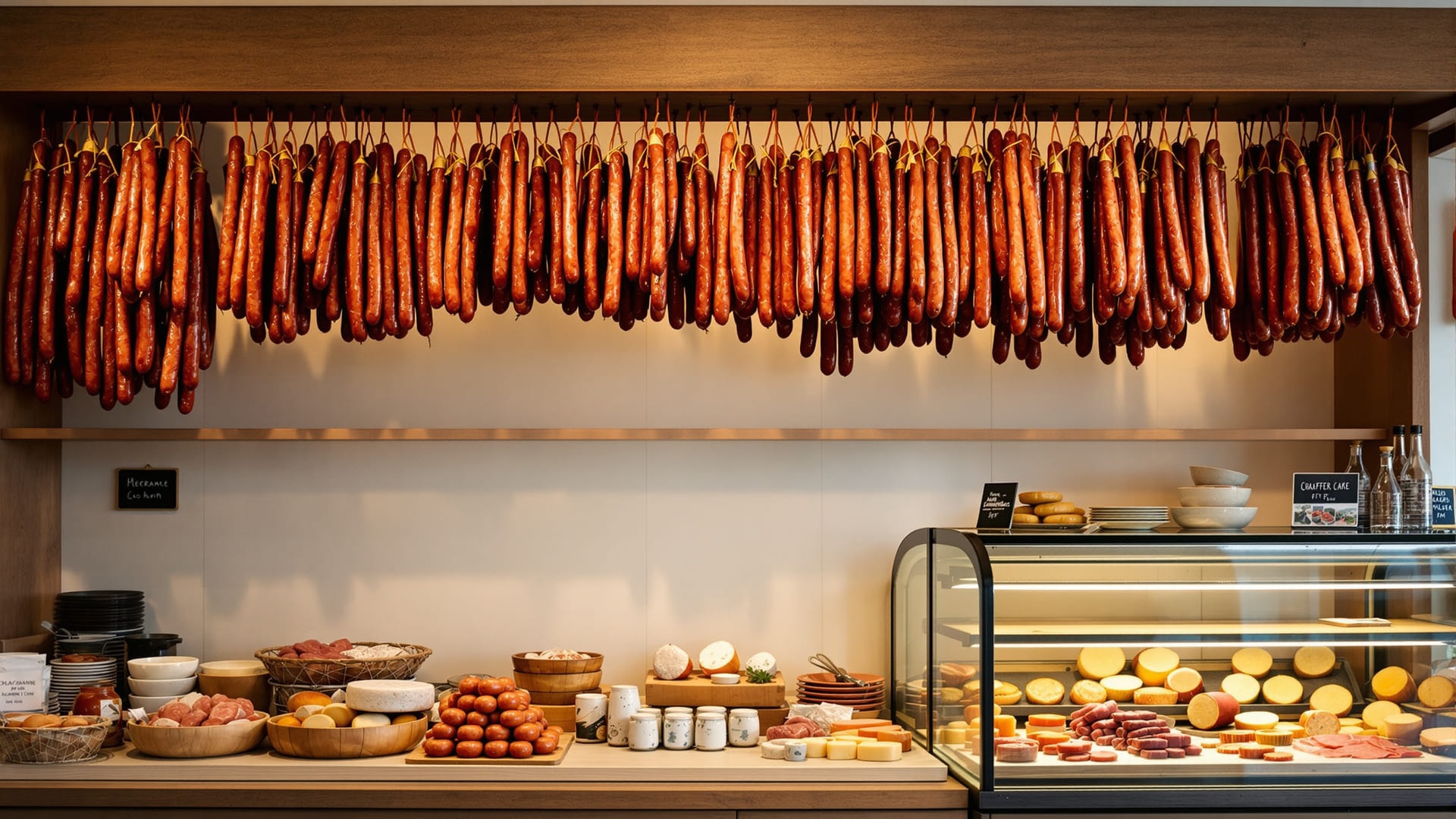
Seed to Sausage, an Eastern Ontario charcuterie business, opened its first retail outlet outside its country base on 17 June 2014 on Gladstone Avenue, on the edge of Little Italy. The store ran to about 500 square feet. Founder Michael McKenzie was joined in it by partner Ross May, a former craft beer salesman; manager Don Fex, previously a manager at a big-box retail store; and Kelly Brisson, a food blogger.
The plan was meat, obviously, but also more than thirty artisan cheeses that were close to impossible to find elsewhere in the city, specialty condiments and preserves, and boutique items such as hand-made pasta.
How the business started
Charcuterie — hand-processed meat, cured as bacon or corned beef, or made into terrines and specialty sausages — had been McKenzie's obsession since before he left a naval posting as a sonar operator in British Columbia roughly half a decade earlier. He relocated to Kingston and cured meats and made sausages in his garage, selling to area restaurants that appreciated the craftsmanship. He conceded to Eade that this was illegal at the time.
In 2011 he bought a vacant abattoir west of Ottawa near Sharbot Lake and has operated there since, fully licensed and government inspected, buying from local suppliers and selling across Eastern Ontario with Ottawa as his main customer base. Federal and provincial meat processing sits under a formal inspection regime; the Canadian Food Inspection Agency is the national authority for it.
Eighty-day beef
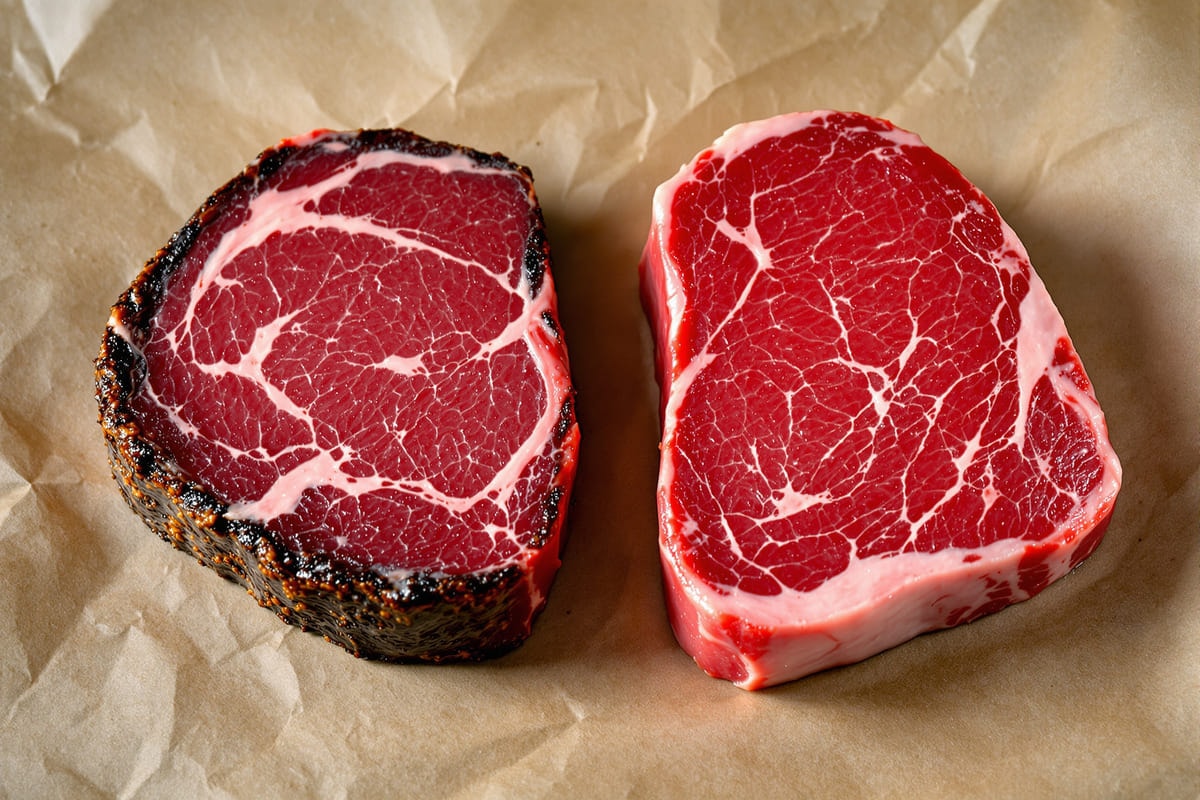
The centrepiece of the piece was a cap-off rib steak about an inch thick, grilled at a neighbouring restaurant and offered to Eade the moment he walked in. He described it as cooked to a perfect medium-rare, the flesh yielding easily to a serrated blade.
What made it unusual was the ageing. The beef came from a 95-acre operation outside Tweed, Ontario, raising purebred black and red Simmental cattle, and was dry-aged at the Sharbot Lake plant for a full eighty days.
The piece then explains the difference in its clearest technical passage. Most supermarket beef is butchered and vacuum-packed at the slaughterhouse and ages perhaps two weeks in transit — wet ageing, which produces bright red meat. Wet ageing does tenderize, as natural enzymes break down internal strands and fibres, but it does not build flavour. Flavour comes from taking the meat out of the plastic and hanging it under controlled temperature so that enzymes keep working while moisture slowly evaporates. Dry-aged beef is not bright red at all but closer to chestnut in colour.
The reason it is rare is loss. Depending on how long it hangs, a butcher can lose twenty per cent or more of the weight to evaporation, on top of the cost of expensive inventory sitting on a hook for weeks.
McKenzie described the process in his own terms: "As it ages we measure the days, the water level and the PH (acidity). We inoculate the meat with our own beneficial bacteria at the start to develop flavour, then take samples as it ages to monitor its progress."
What it cost
The eighty-day cap-off rib sold at $48 a kilo. Eade tested that against comparable dry-aged product elsewhere and concluded it was not unreasonable: a Chicago steakhouse was then retailing seventy-five-day ribeye at $75, a New Jersey purveyor seventy-day porterhouse at $114 per kilo, and an Ottawa supplier forty-day boneless ribeye at $46.
Sausages ran at $18 a kilo — red wine and garlic, chorizo, maple walnut among many others. Cured bacon was $19 to $20. "Of everything we make, bacon takes the most work to produce," McKenzie said. "It takes 1 1/2 weeks to cure, then we hand trim and slice it before packaging." Pork bellies, he added, cost him more per unit than almost anything else he bought, including most of his beef, and prices had risen enough that they had been losing money on bacon until a price increase the week before.
The cheese counter
For May, the cheese was the point. "Our philosophy about cheese comes from the mindset I developed when I worked with microbrewers — and that is, to support local and Canadian producers who make a really good product that may not be available anywhere else in town."
He singled out a farmstead cow's-milk cheese from Elgin, Ontario, north of Kingston, made by a producer with only fifty head of cattle whose entire milk output goes to the cheese — "a one-man army who does it all himself" — and a Lanark cheese made by a husband-and-wife team who "run the farm and make the cheese, everything from A to Z."
See also
The same producer's annual whole-hog festival, held at the country plant a month earlier, is covered in this piece, and charcuterie recurs across Eade's reporting — including in the Westboro menu rebuild, where a daily charcuterie selection survived the cull.