ZenKitchen closes suddenly due to tax arrears
Originally filed at roneade.com
The owner thought he had a deal worked out with the revenue agency. Apparently not. His executive chef considers a bid to take the place over.
Archive note. This page preserves work first published on roneade.com between 2014 and 2016. Ron Eade died in August 2015; nothing on this site is new writing in his voice, and the reporting below is presented as a dated record rather than as current coverage. Restaurants, prices and staffing described here reflect the moment the piece was filed.
What happened
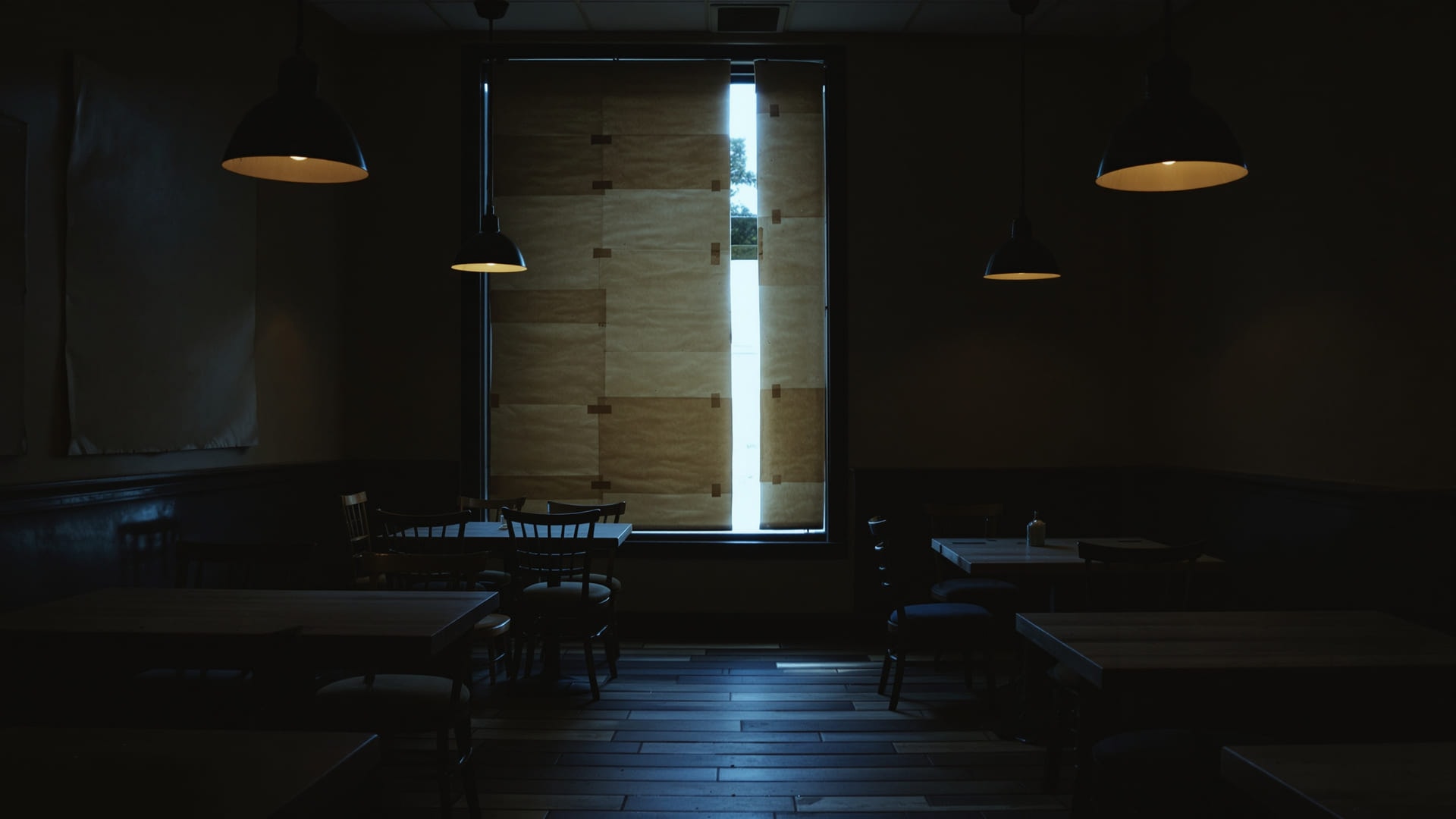
ZenKitchen, the high-end vegan restaurant on Somerset Street in Ottawa's Chinatown, opened on 26 July 2009 and closed on 23 May 2014, four years and ten months later. The immediate cause was a court order: the Canada Revenue Agency obtained one, and on the Thursday before the closure it seized the restaurant's corporate bank account over unpaid harmonized sales tax. Service stopped at lunch the following day.
Eade filed this piece from a downtown pub on the Saturday of the city's race weekend, where he had arranged to meet owner David Loan, then 51, and executive chef Kyle Mortimer-Proulx, then 29. He disclosed his own relationship to the story at the top of it: he and Loan went back to the early 1990s, when Loan was an alderman's assistant at Ottawa City Hall, and he described him as a friend. He had known Mortimer-Proulx for less time, having worked alongside him at public cooking demonstrations.
The owner, on the record
Loan did not dispute that the money was owed. "We have for some time had a debt to the Canada Revenue Agency for HST," he said. "We have not argued that we owe the money, we know we owe the money. We came to an agreement with them that we would make certain payments and we have made those payments." The agency, he said, had also required the restaurant to move from annual to more frequent reporting.
His summary of the ending was shorter. "I literally put every penny I had into this place," Loan said. "I think CRA closed us down because they were tired of having the file open on their desk."
Eade noted, without softening it, that everyone has to pay taxes and that this was not in dispute. What he was after was the mechanics of how a restaurant with critical acclaim and a national television profile ends up on the wrong side of a seizure order.
The restaurant's reputation
ZenKitchen had drawn attention almost from the day it opened. Loan founded it with his then-partner, executive chef Caroline Ishii, and the trials of launching a fine-dining vegan restaurant became the subject of a thirteen-episode television series in 2010. Ishii left the restaurant in April 2013. Mortimer-Proulx had run the kitchen for the two years since.
Small details in the piece did as much work as the numbers. Loan, Eade wrote, was the kind of owner who set aside his own pocket change at the end of each day so that staff would receive the tips customers had put on credit cards, at a time when he was short of cash himself.
The knock-on effects
The closure put the chef's autumn plans in doubt. Mortimer-Proulx had earned an invitation to compete in the regional Gold Medal Plates culinary competition in Ottawa that November, and losing his home kitchen made his participation uncertain. Eade pointed to a precedent: chef Michael Radford had been forced to forfeit in 2011 when his employer closed after twenty-four years, though by 2014 he had taken over another kitchen and was back in the competition. The roster for that year's contest was still being settled in May, and the result came in November.
Diners tried to raise money online to keep the restaurant afloat, and two chefs were exploring the possibility of taking it over — a long shot, in Eade's assessment at the time. Neither effort succeeded.
Why it mattered
This was the first of two high-profile Ottawa closures inside a week. Two days after this piece ran, the owner of Domus Café in the ByWard Market announced that he too was finished after eighteen years; that interview was filed on 27 May. A month later, a Westboro chef-owner used both closures as the starting point for a long conversation about what the numbers actually look like in a saturated market.
Taken together, the three pieces are the closest thing the archive has to a thesis: that a restaurant's survival in this period turned less on the food than on rent, seat count, cash flow and remittances. Sales tax is held in trust by a business on the government's behalf rather than earned by it, which is why arrears of this kind escalate quickly; the federal regulatory framework that small food businesses operate inside is only one part of a compliance burden that also includes payroll source deductions and consumption tax.
Later that year, a group of chefs founded a fund specifically for hospitality workers displaced by failures like this one. One of its founders was Caroline Ishii, ZenKitchen's co-founder.